Resources

The evolution of AI

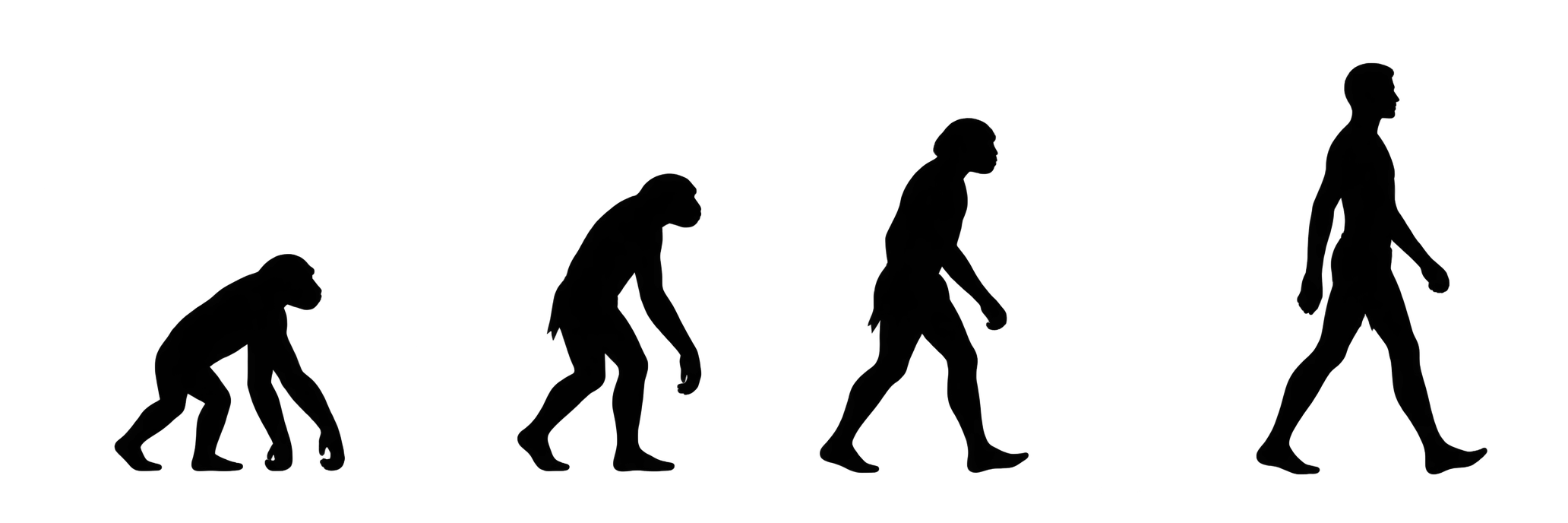
Artificial intelligence can be understood in four generations. Each one puts the intelligence somewhere new, and each one has a limit that leads to the next.

Four generations of AI

  1. AI generation 1

    Chat

  2. AI generation 2

    Application

  3. AI generation 3

    Individual

  4. AI generation 4

    Company

Generation 01

Chat

This was the ChatGPT moment. A human talked to an agent trained on a broad range of information. You asked questions, pasted in a document or handed it a small task. It could respond to what you shared, but it had no built in knowledge of you, your company or your job. Each new conversation started without that context.
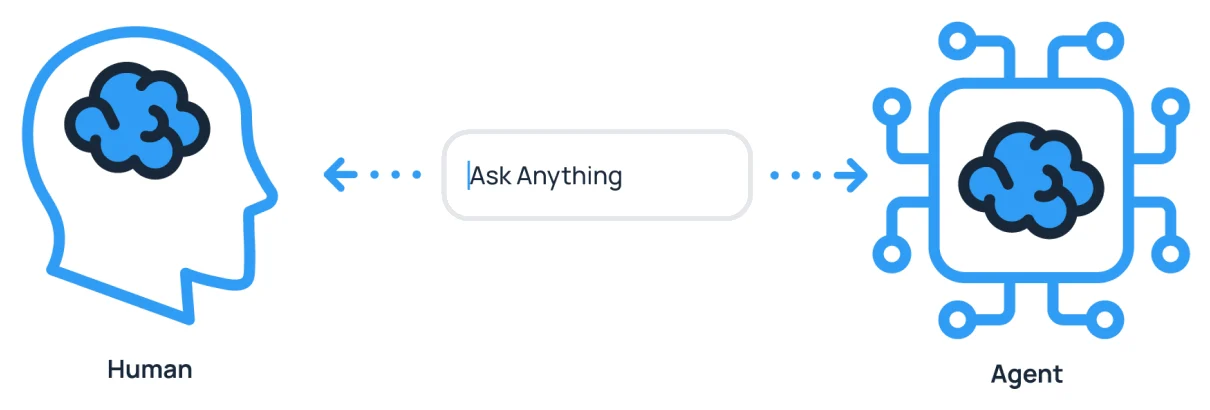
Original ChatGPT release

Generation 02

Application

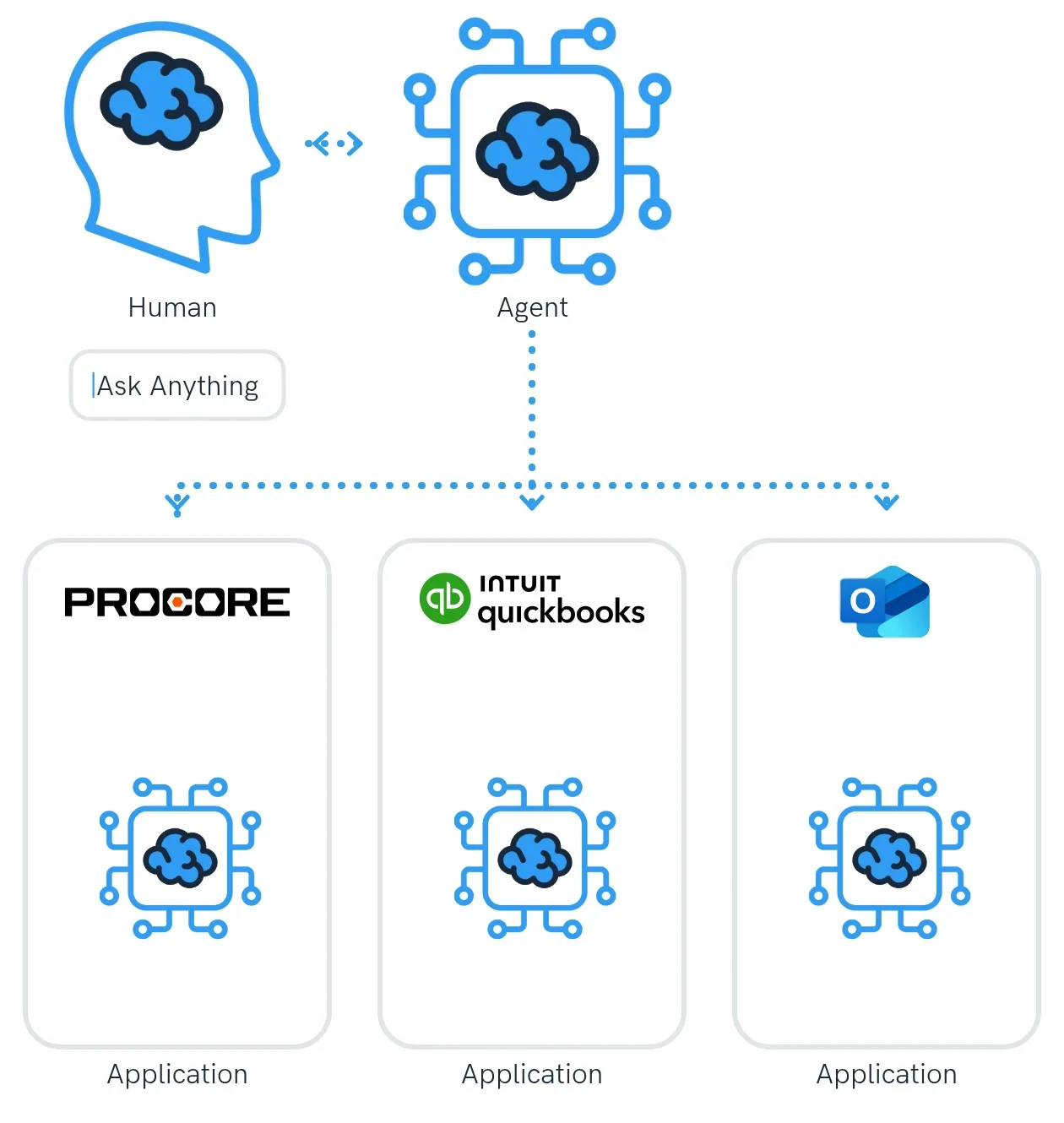
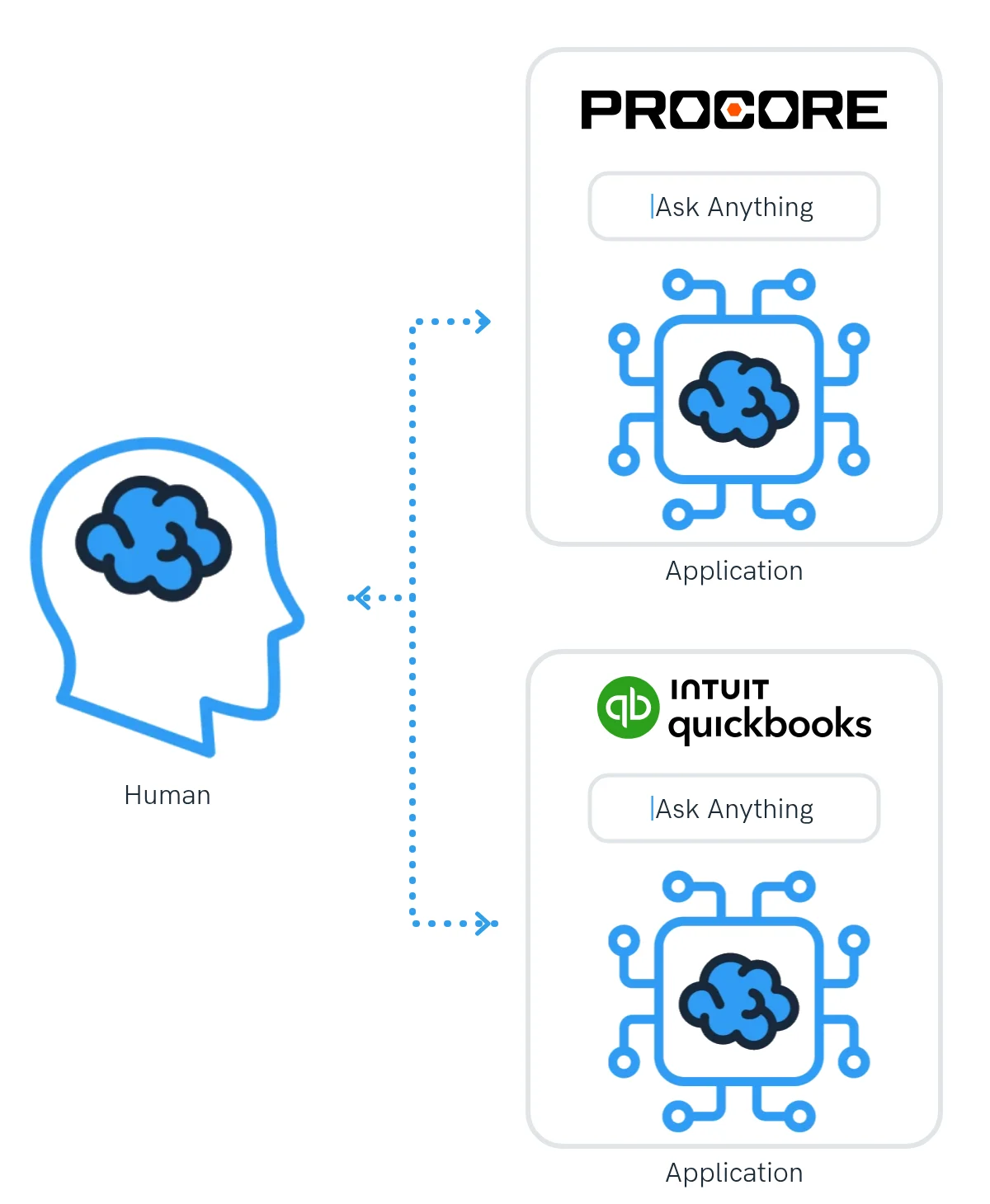
The intelligence moves inside the applications you already use. Procore and QuickBooks are examples of apps with built in AI. Ask about the information it can access and it answers. It makes the app better. At this stage, the limit is the frame. Each agent works with the information it can access inside its own application. Without a connection between them, adding a second app means two intelligences that have never met.

Generation 03

Individual

The intelligence steps out of the applications and sits beside you. One agent, yours, that works across the apps you connect. It reads your email, checks the schedule and pulls the invoice, so you stop walking from one "Ask anything" bar to the next. It works with the app information you let it access. That's also the limit: it lives on one person's account. Your PM's agent doesn't know what your super's agent heard this morning. A business runs on teams, not individuals.

Generation 04

Company

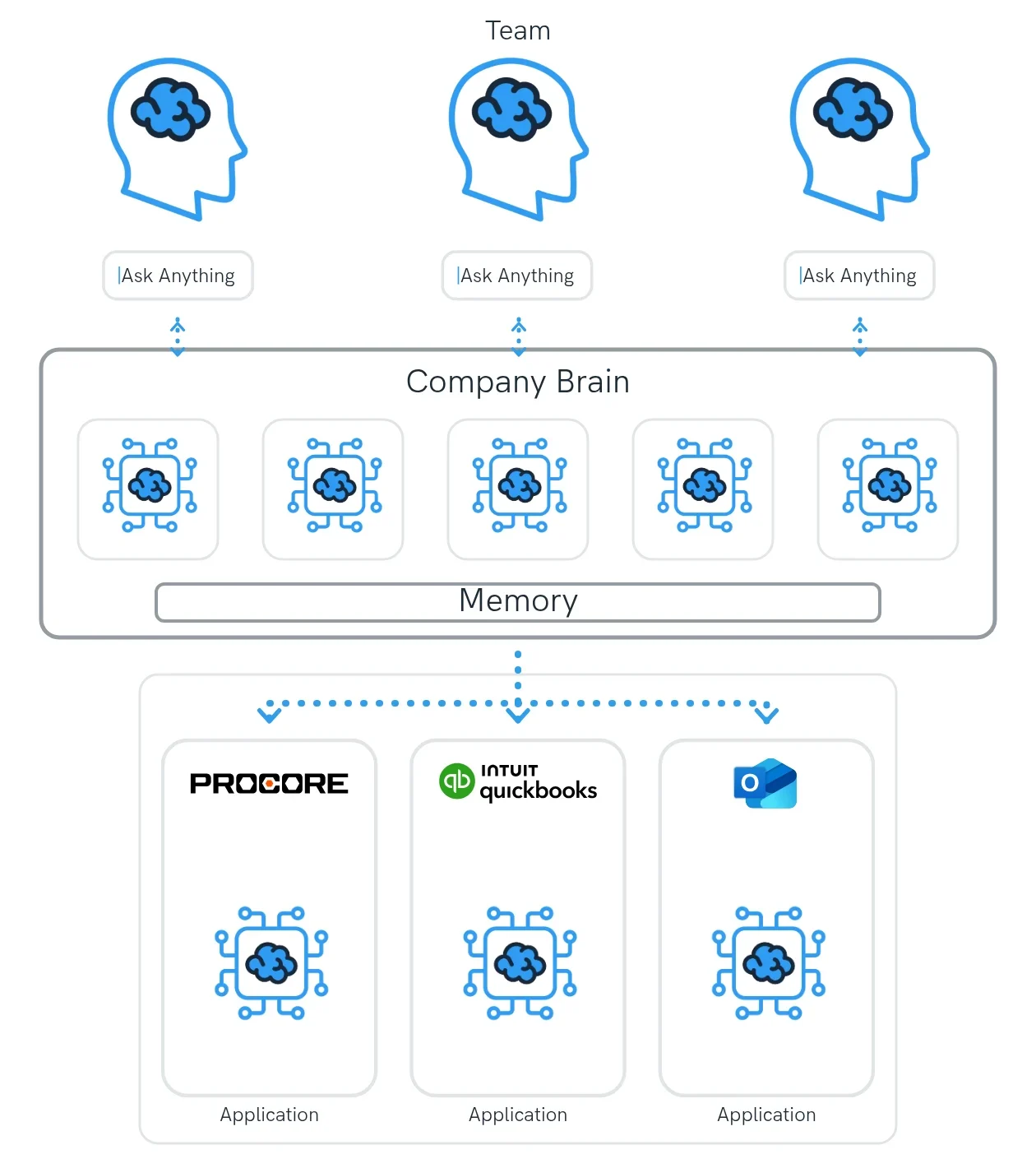
The Company Brain is intelligence and memory in one place. The agents work inside it, with every email, decision and document on every project filed and remembered. The applications stay. The team and agents drive them with the Company Brain.

Instead of context staying with one person's agent, the Company Brain gives the team and its agents shared company memory.